



You’re grieving and handling paperwork at the same time. The house doesn’t have to be the hardest part.
If you’re the executor of a parent’s estate in Calgary, here’s the short version: you can usually start preparing the home and line up a sale early, but in most cases the sale can’t close until the court issues a grant of probate. Plan around that timing, keep the house insured and looked after, and keep everyone in the family working from the same information.
Here’s how we walk executors and families through it.
First, find out if you need probate
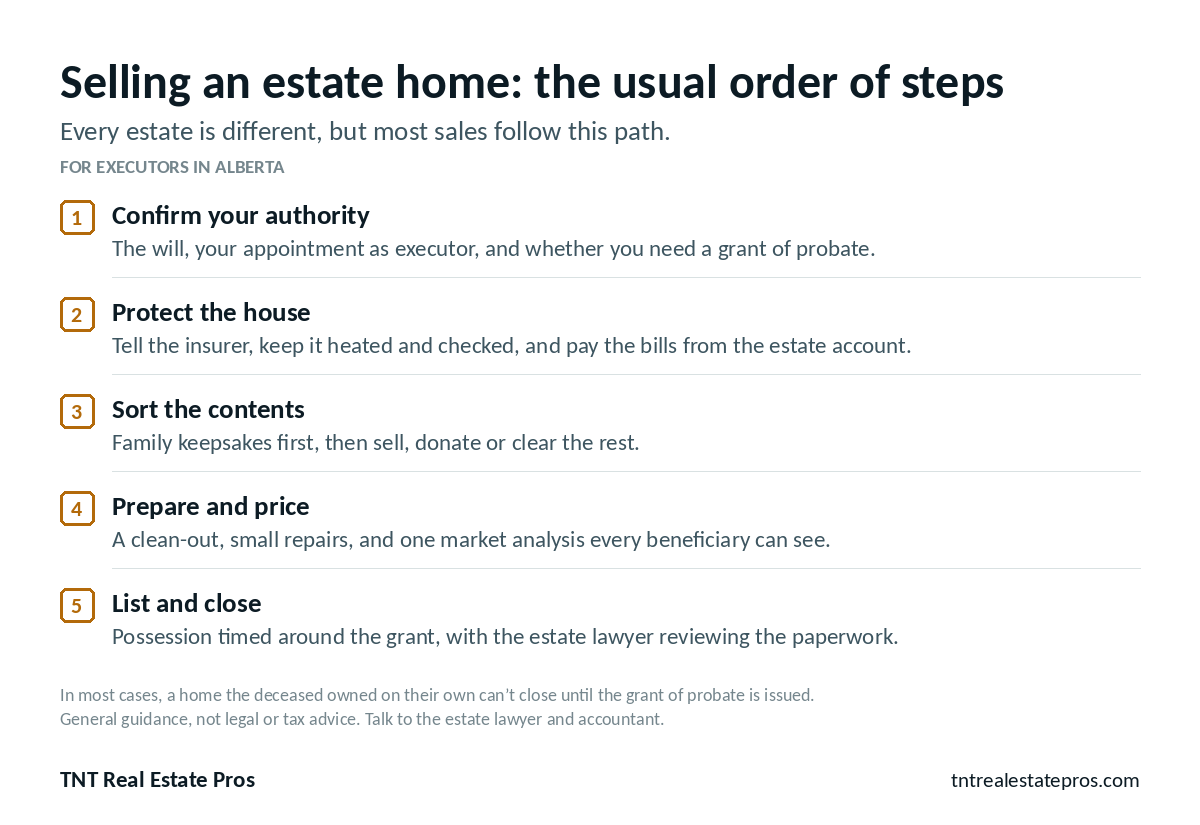
In Alberta, the executor named in the will (the personal representative) can start acting right away. But to sell or transfer a house the deceased owned on their own, Land Titles needs a filed copy of the grant of probate, or letters of administration if there’s no will. Your lawyer applies to the Court of King’s Bench of Alberta. The court filing fee tops out at $525 for estates over $250,000. Legal fees are separate.
If your parent owned the home as a joint tenant with a surviving spouse, it usually passes straight to the survivor with a death certificate, and probate isn’t needed for the house.
If your parent was married and the home is in their name only, Alberta’s Dower Act may give the surviving spouse a life estate: the right to live in the home for life. Ask the estate lawyer about this before you plan a sale.
Can I list the house before probate is granted?
Often, yes. Many executors prepare the home, and some list it, while the application is in, so the sale can move quickly once the grant arrives. Any offer has to work with that timing, usually with a possession date set well out or a condition tied to the grant. Your lawyer should review the listing and any contract before you sign. How long a grant takes varies, so we build in room rather than promise a date.
Protect the house in the meantime
- Call the insurer. Tell them the owner has passed and the home may sit empty. Many policies limit coverage once a home is vacant for a set period.
- Keep it heated and checked. In a Calgary winter, a furnace failure in an empty house can mean burst pipes. Set a regular check-in.
- Keep utilities and property tax paid from the estate account, and keep every receipt.
- Secure valuables and papers. Change the locks if you’re not sure who has keys.
Before you list: the executor’s checklist
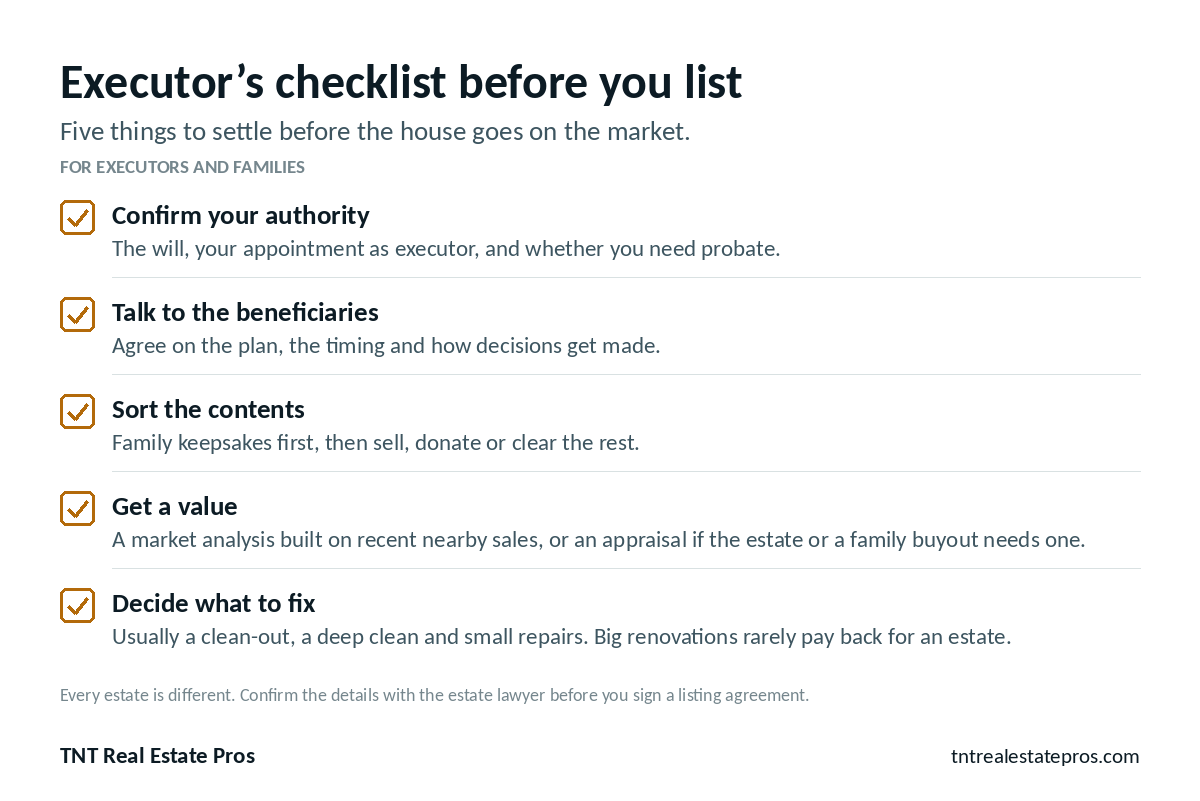
- Confirm your authority. The will, your appointment as executor, and whether you need probate.
- Talk to the beneficiaries. Agree on the plan, the timing and how decisions get made.
- Sort the contents. Family keepsakes first, then sell, donate or clear the rest.
- Get a value. A market analysis built on recent nearby sales, or an appraisal if the estate or a family buyout needs one.
- Decide what to fix. Usually a clean-out, a deep clean and small repairs. Big renovations rarely pay back for an estate.
When a family member wants to buy the house
It happens more often than you’d think. A fair value, usually from an independent appraisal, protects you as executor and keeps things fair for the other beneficiaries. Bring the estate lawyer in early so the paperwork reflects what everyone agreed to.
Taxes and the final return
Talk to the estate’s accountant before the sale. The family home may qualify for the principal residence exemption, but the rules depend on the situation, and a change in value after the date of death can matter. Get that advice before you set price expectations with the family.
How we help
We work with executors at the pace the family needs. You get an honest market analysis, clear advice on what’s worth doing before listing and what isn’t, and one point of contact who coordinates with the estate lawyer on timing. If beneficiaries live out of town, everyone gets the same updates at the same time. With 25+ years each in Calgary real estate, we’ve helped many families through this, and we know patience and clear communication matter as much as the price.
Interviewing agents for the estate? Our guide on how to choose the best realtor for an estate sale in Calgary covers what to look for and the questions to ask.
Settling a parent’s estate and not sure where to start with the house? Send us a message. We’ll talk through your options, with no pressure to list.
Questions
Frequently asked questions
How long does probate take in Alberta?
It depends on the estate and the court’s workload. Ask your lawyer for a current estimate, and plan the sale around it.
Do I have to sell the house as is?
No. Some estates sell as is; others clean, paint and do small repairs first. We’ll show you what similar homes sold for in each condition so you can decide.
What if the beneficiaries don’t agree?
Start with shared information: one market analysis everyone sees, and updates sent to everyone at once. If you still can’t agree, the estate lawyer can advise on next steps.
Does the executor have to live in Calgary?
No. Much of the work can be handled remotely, with access, showings and updates managed locally.