


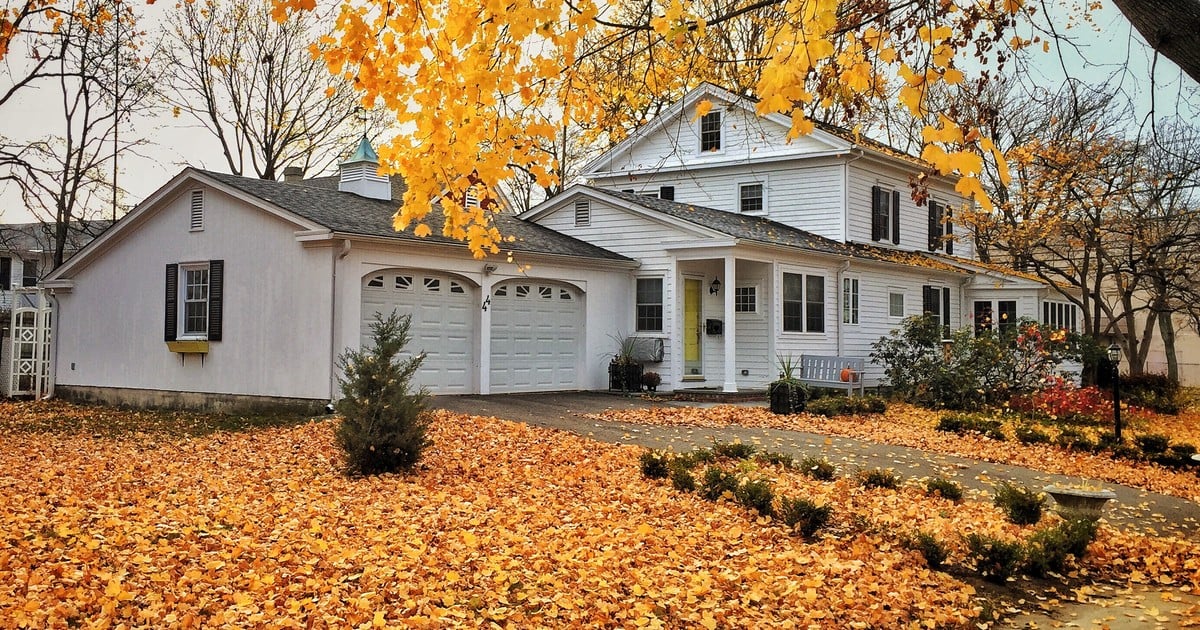
Summer patio season is winding down, and that’s your cue.
As the days get shorter and that first frost gets closer, a few hours of fall maintenance now can save you a cold-weather headache (and a costly repair) later. Whether you’re staying put, thinking about listing next spring, or you just closed on your first Calgary home, here’s what to check, clean, and winterize before winter settles in.
Why fall maintenance matters in Calgary
Calgary winters are hard on a home: freeze-thaw cycles, heavy snow loads, and the occasional early cold snap all test the parts of your house you don’t think about the rest of the year — your furnace, your eavestroughs, your outdoor taps. Catching a small issue in October is a lot cheaper than discovering it in January. And if you’re weighing a spring sale, a well-maintained home shows better and protects the value you’ve built.
Your fall home maintenance checklist
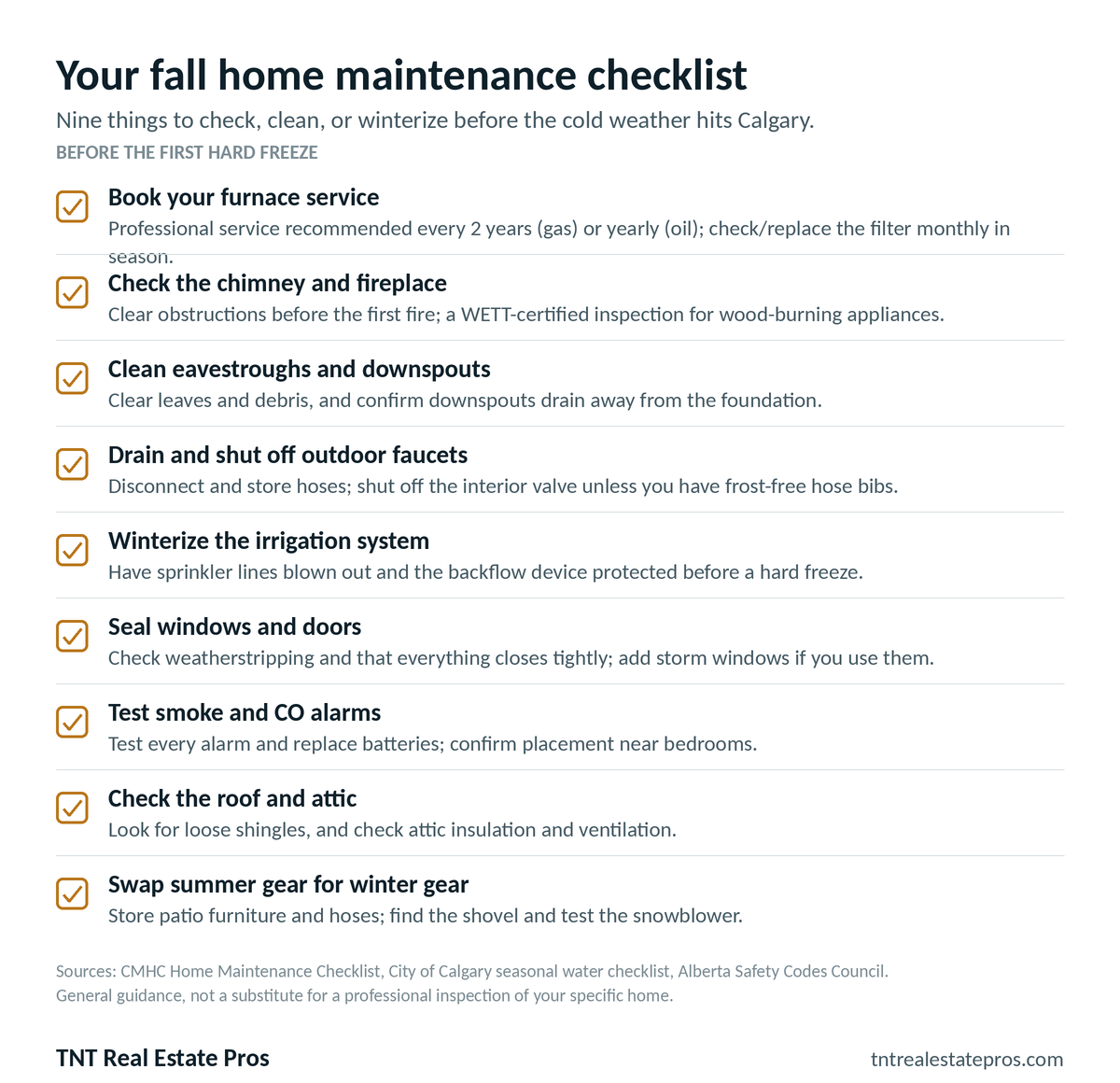
- Book your furnace service. Have your furnace serviced by a qualified technician before you need it. The Canada Mortgage and Housing Corporation (CMHC) recommends professional servicing every two years for a gas furnace and every year for an oil furnace, with the filter checked and cleaned or replaced monthly through the heating season (VERIFY current CMHC guidance, and ask your HVAC company whether they recommend a shorter interval for your furnace’s age). Turn the heat on for a test run before the first cold night, so a problem shows up on your schedule, not the furnace’s.
- Check the chimney and fireplace. Before you light the first fire, check the chimney for obstructions like a bird’s nest or debris (CMHC). If you have a wood-burning fireplace or stove, a WETT-certified inspection is the recognized standard in Canada for making sure it’s safe to use (VERIFY cost and scheduling with a local WETT-certified inspector; typical timing is once a year for a wood-burning appliance in regular use).
- Clean the eavestroughs and check your downspouts. Clear leaves and debris from eavestroughs and the roof, and run water through downspouts to confirm they drain away from your foundation (CMHC). This is one of the cheapest ways to prevent water finding its way into a basement over the winter.
- Drain and shut off outdoor faucets. Disconnect garden hoses, drain them, and store them indoors. Unless your home has frost-free hose bibs, shut off the interior valve to each outdoor tap and drain the line (CMHC). A frozen, cracked pipe is a common and preventable winter repair.
- Winterize your irrigation system and rain barrel. If you have a sprinkler system, have it blown out and the backflow device protected before a hard freeze (City of Calgary). Drain and winterize any rain barrel too — disconnect the diverter and store it upside down or indoors (City of Calgary).
- Seal up windows and doors. Check that windows, skylights, and exterior doors close tightly, and repair or replace worn weatherstripping (CMHC). If you use storm windows, now’s the time to put them up. Sealing drafts is one of the most noticeable, least expensive comfort upgrades you can make before winter.
- Test your smoke and carbon monoxide alarms. Test every smoke and carbon monoxide alarm and replace the batteries (CMHC). Under Alberta’s building code, homes with fuel-burning appliances need a carbon monoxide alarm inside or within 5 metres of each bedroom door (VERIFY this matches your home’s construction date and setup, and confirm with a licensed electrician if you’re unsure). It’s a five-minute check that matters most on the night you don’t expect to need it.
- Look up, and look down. Take a walk around the outside of your home. Check the roof for loose or damaged shingles before the snow arrives, and check your attic’s insulation and ventilation — good attic ventilation helps prevent ice damming along the roofline. If you have window wells, clear out leaves and debris so they can drain properly.
- Put summer gear away, and bring winter gear out. Store patio furniture, garden hoses, and lawn equipment. While you’re at it, find the snow shovel and check that your snowblower (if you have one) starts before you actually need it on a snowy morning.
A quick example
Here’s the kind of thing this checklist catches: a clogged eavestrough that overflows against the foundation all winter can lead to basement seepage that’s far more expensive to fix than an hour with a ladder and gloves in October (VERIFY typical repair cost ranges if you’d like a number here — we didn’t want to guess). Small jobs now, real savings later.
How we help
Whether you’re staying in your home for years, getting it ready to list in the spring, or you just moved in and want a seasonal routine, a well-maintained home is easier to enjoy and easier to sell when the time comes. If you’re thinking about your home’s value heading into next year, we wrote about what’s worth fixing before you sell, and why fall can be a smart season to make a move.
Want a second set of eyes on what your home needs before you list, or before winter hits? Send us a message — we’re happy to walk through it with you.
Frequently asked questions
When should I do fall home maintenance in Calgary?
Aim to get through this checklist before the first hard freeze, typically by mid-to-late October in the Calgary area (VERIFY against current-year forecasts, since first-frost timing varies year to year).
How often should I have my furnace serviced?
CMHC recommends every two years for a gas furnace and every year for an oil furnace, with filters checked monthly during the heating season (VERIFY with your HVAC provider, since furnace age and household factors can change this).
Do I need to winterize my sprinkler system every year?
Yes. The City of Calgary recommends winterizing (blowing out) irrigation systems every fall to prevent freezing and line damage.
What if I have a wood-burning fireplace?
Have it inspected by a WETT-certified professional before you use it for the season (VERIFY frequency and cost with a local certified inspector).
Does fall maintenance matter if I’m planning to sell?
Yes. A well-maintained home shows better, and catching small issues now means fewer surprises during a buyer’s inspection later.